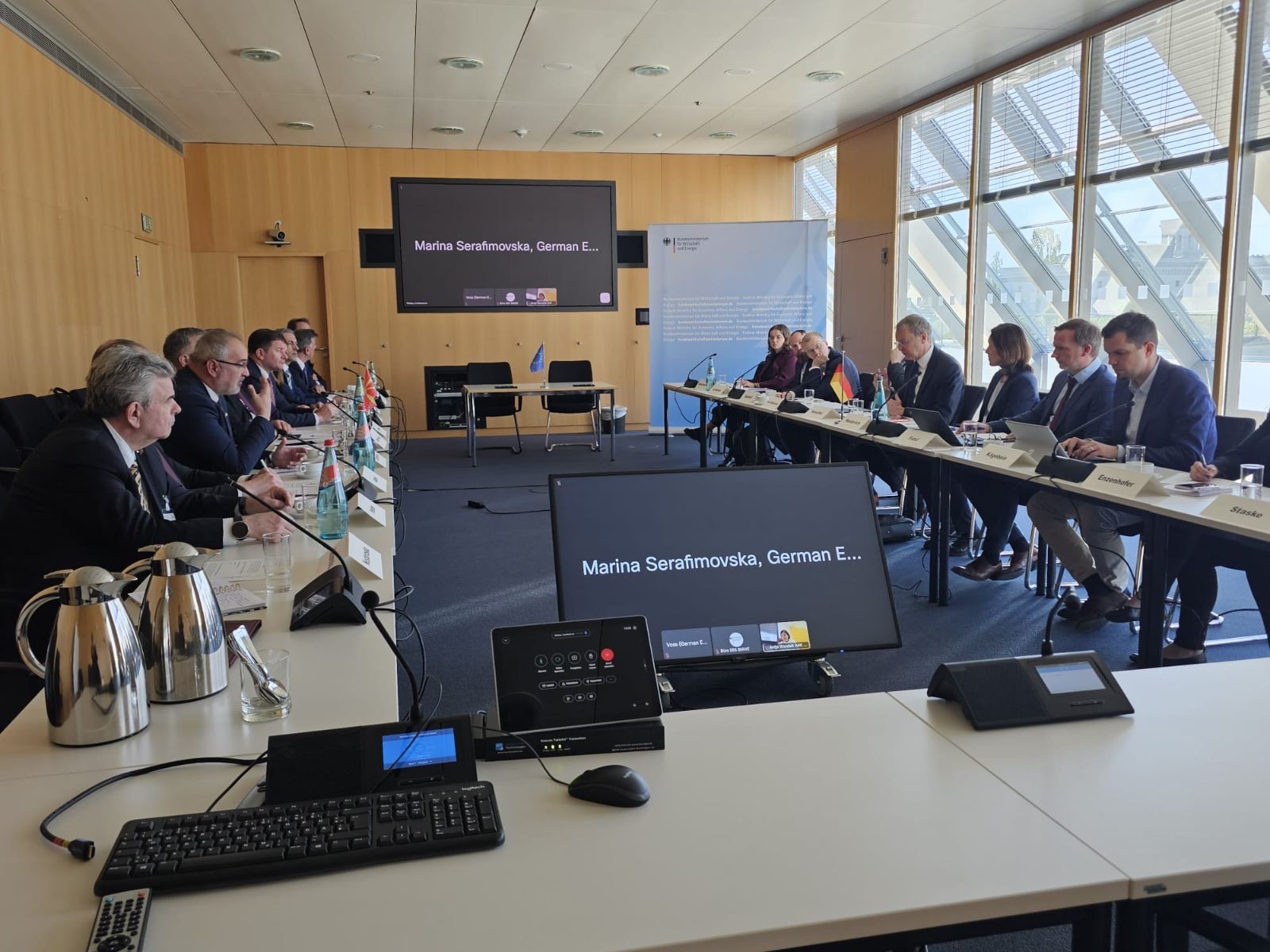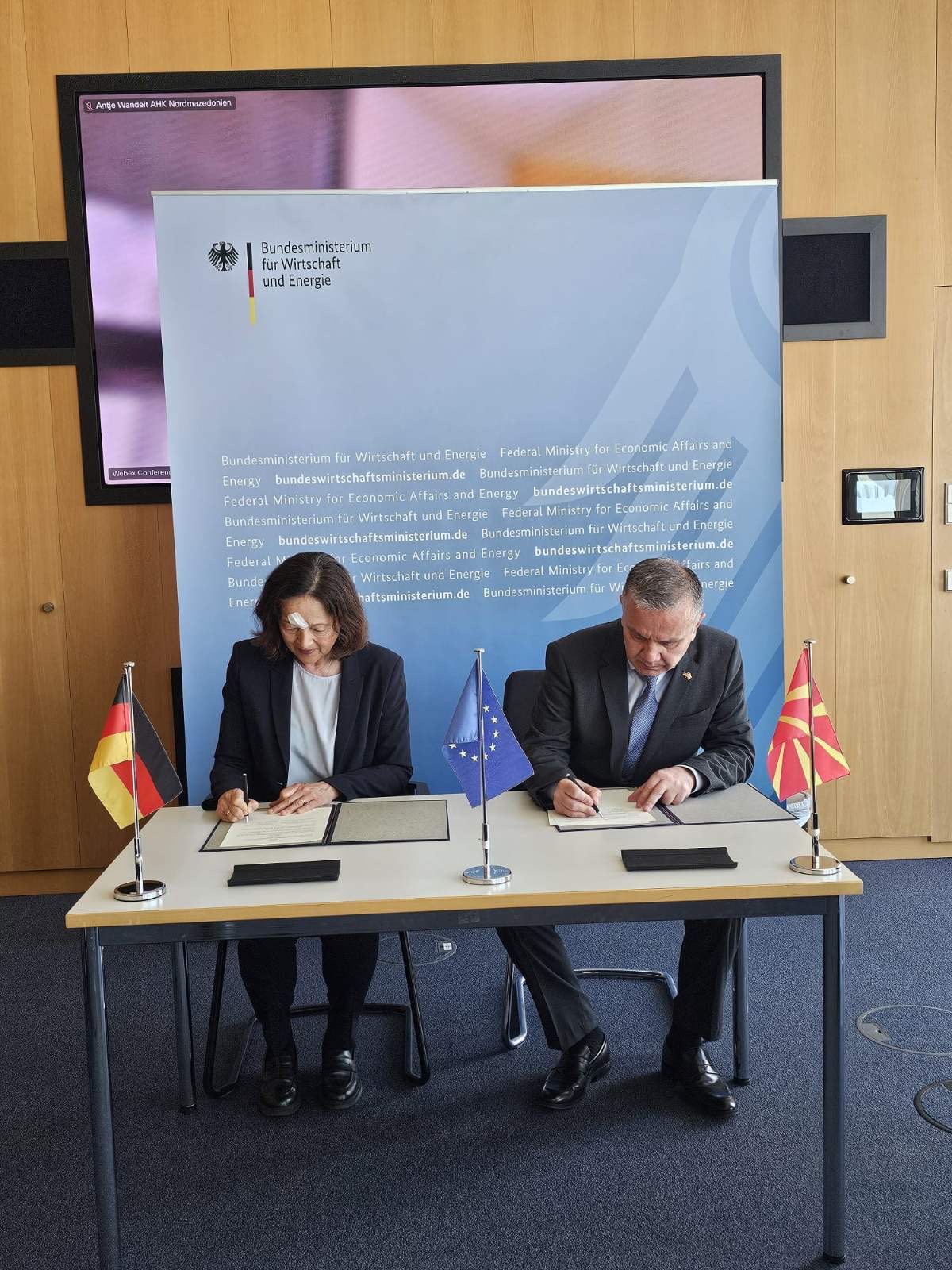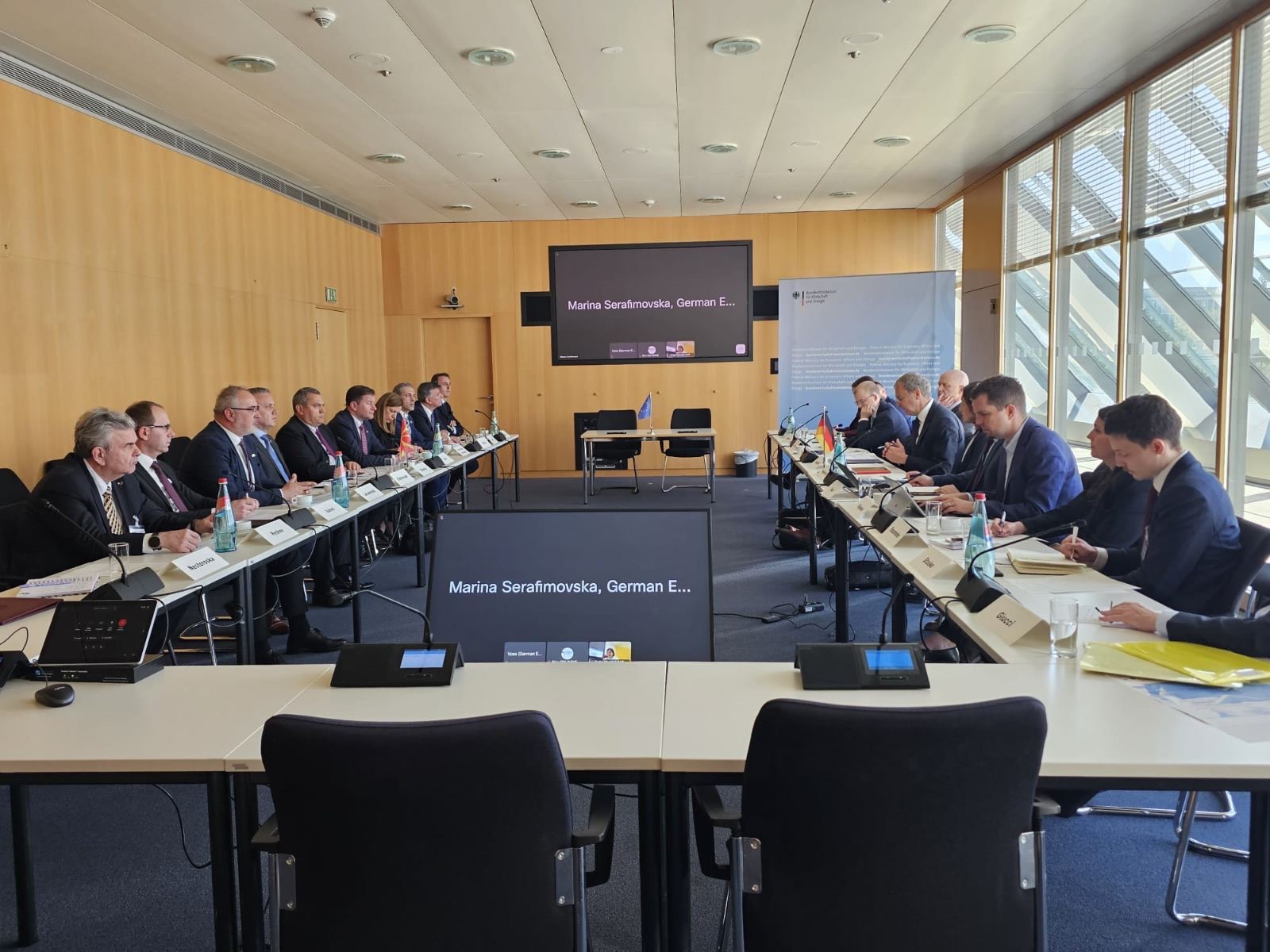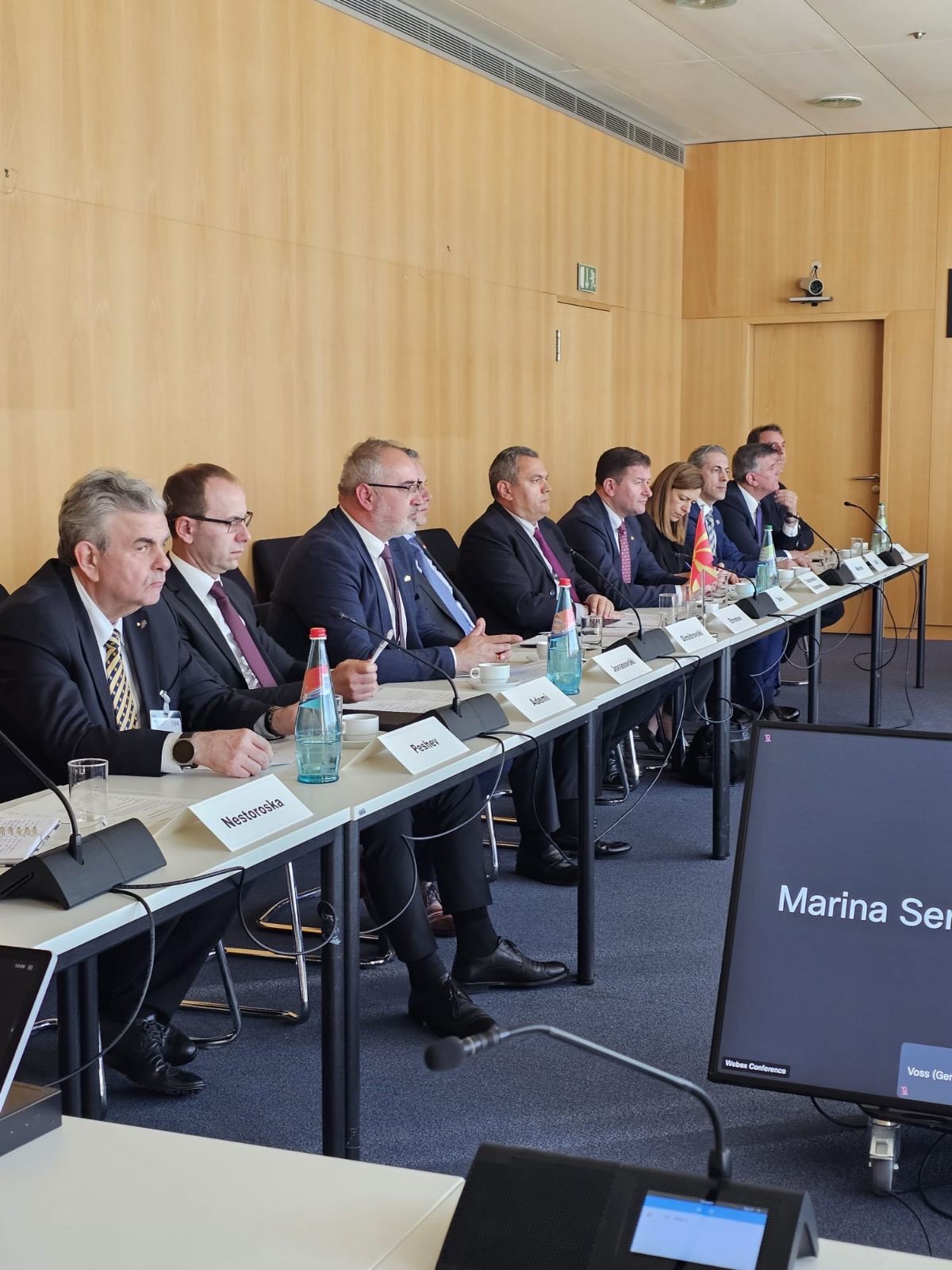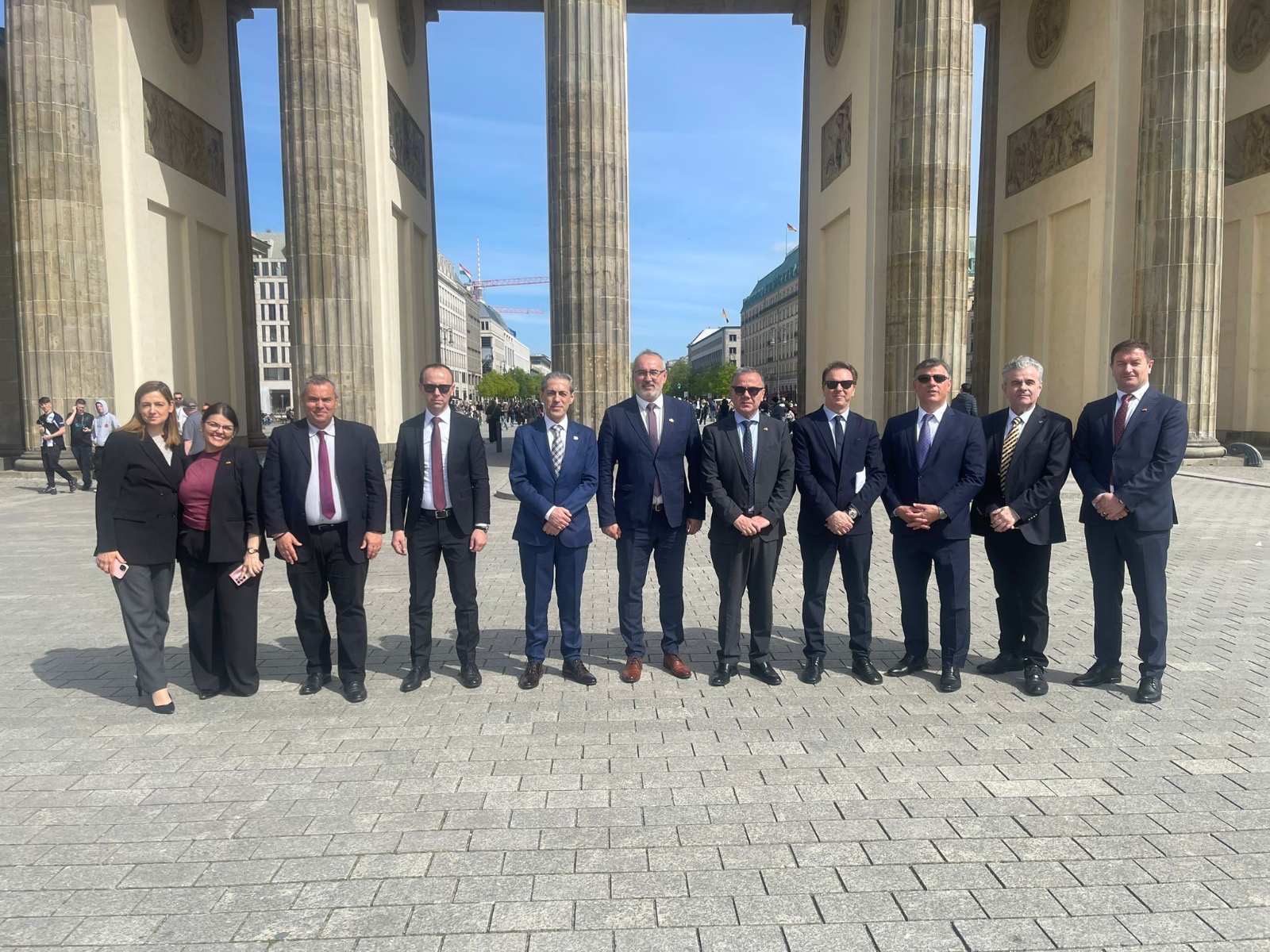
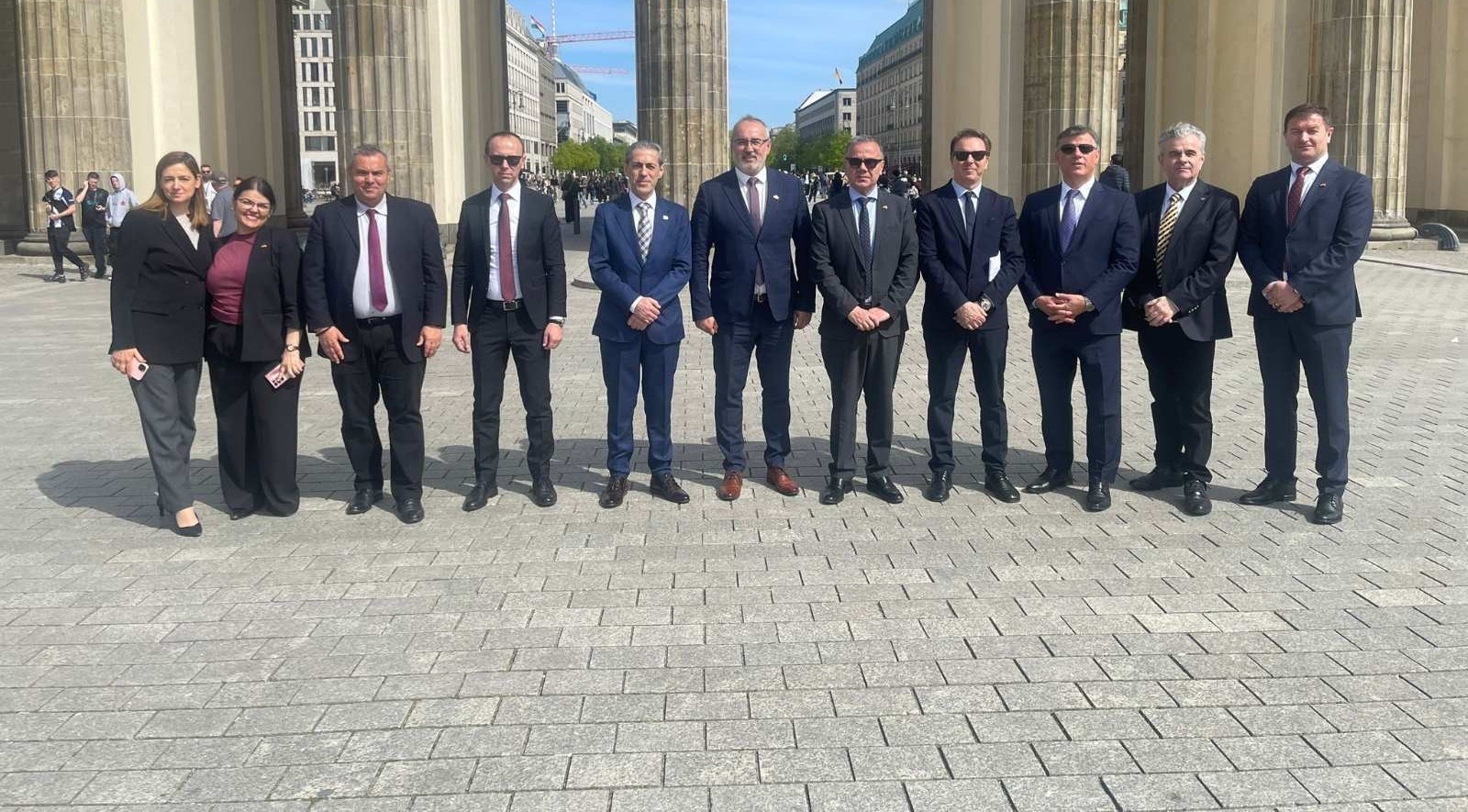
At the meeting of the German–Macedonian Joint Economic Steering Committee (JESCO), held at the Federal Ministry for Economic Affairs and Energy of the Federal Republic of Germany, North Macedonia delivered a clear message: the energy transition is not a plan for the future, but a process that is already delivering concrete results.
As part of the official delegation, the State Secretary at the Ministry of Energy, Mining and Mineral Resources, Goran Jovanovski, participated and delivered an address focusing on energy policy, decarbonization, investment development, and security of energy supply in North Macedonia.
In his remarks, Jovanovski emphasized that the country is implementing a decisive energy policy based on two key priorities: accelerated decarbonization and secure, stable energy supply. With the adoption of the new Energy Law in May 2025, the state established a modern, transparent system fully aligned with European standards, ensuring predictability for investors and putting an end to market uncertainty.
“The state no longer follows the market – it shapes its direction,” Jovanovski stressed, noting that through the introduction of systematic planning and annual plans for new energy generation and storage capacities, development has become coordinated, predictable, and strategically oriented.
He highlighted that a strong investment cycle in renewable energy sources and energy storage is already underway, resulting in increased domestic production, reduced dependence on imports, and strengthened energy independence. In parallel, investments are being made in the modernization of the electricity grid and the development of smart and balancing capacities as a foundation for the green transition.
Additionally, the new Law on Renewable Energy Sources, currently in its final stage, will enable faster implementation of investments through simplified procedures and greater transparency, with a clear objective: more renewable energy, fewer fossil fuels, and reduced emissions.
During the discussions, the importance of the Integrated National Energy and Climate Plan 2025–2030 was also emphasized. The plan contains 61 concrete measures covering decarbonization, energy efficiency, market reform, and enhanced security of supply.
Jovanovski underlined that energy security remains a top priority, to be achieved through diversification of supply sources, new interconnections, and strengthened regional integration, stressing that “energy stability is not only an economic issue, but also a matter of national security.”
The JESCO meeting, which began with a working session and an exchange of economic analyses and perspectives between the two countries, enabled direct dialogue with chambers of commerce, the business community, and expert teams, with a focus on the investment climate and shared strategic priorities.
North Macedonia remains firmly committed to its European path, with a clear orientation toward full alignment with EU standards in energy and climate policies—through concrete reforms, transparent implementation, and measurable results.
With regards,
Ministry of Energy, Mining and Mineral Resources