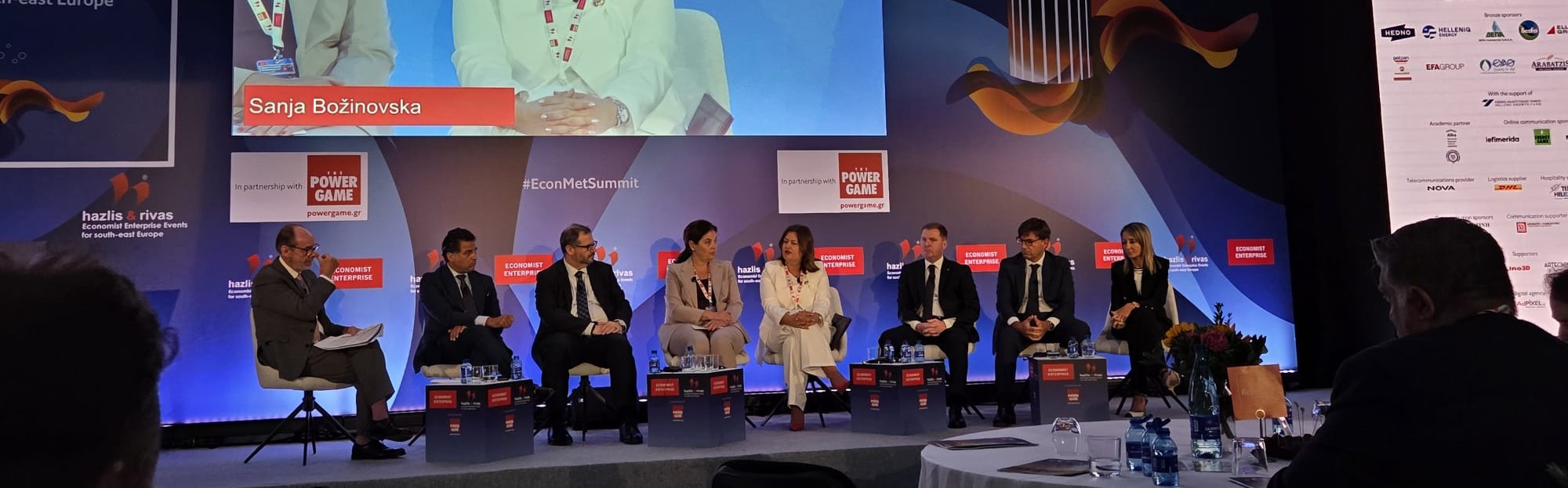
"We do not want to be merely an observer - we want to be an active partner and an energy corridor connecting the south with Central and Eastern Europe"
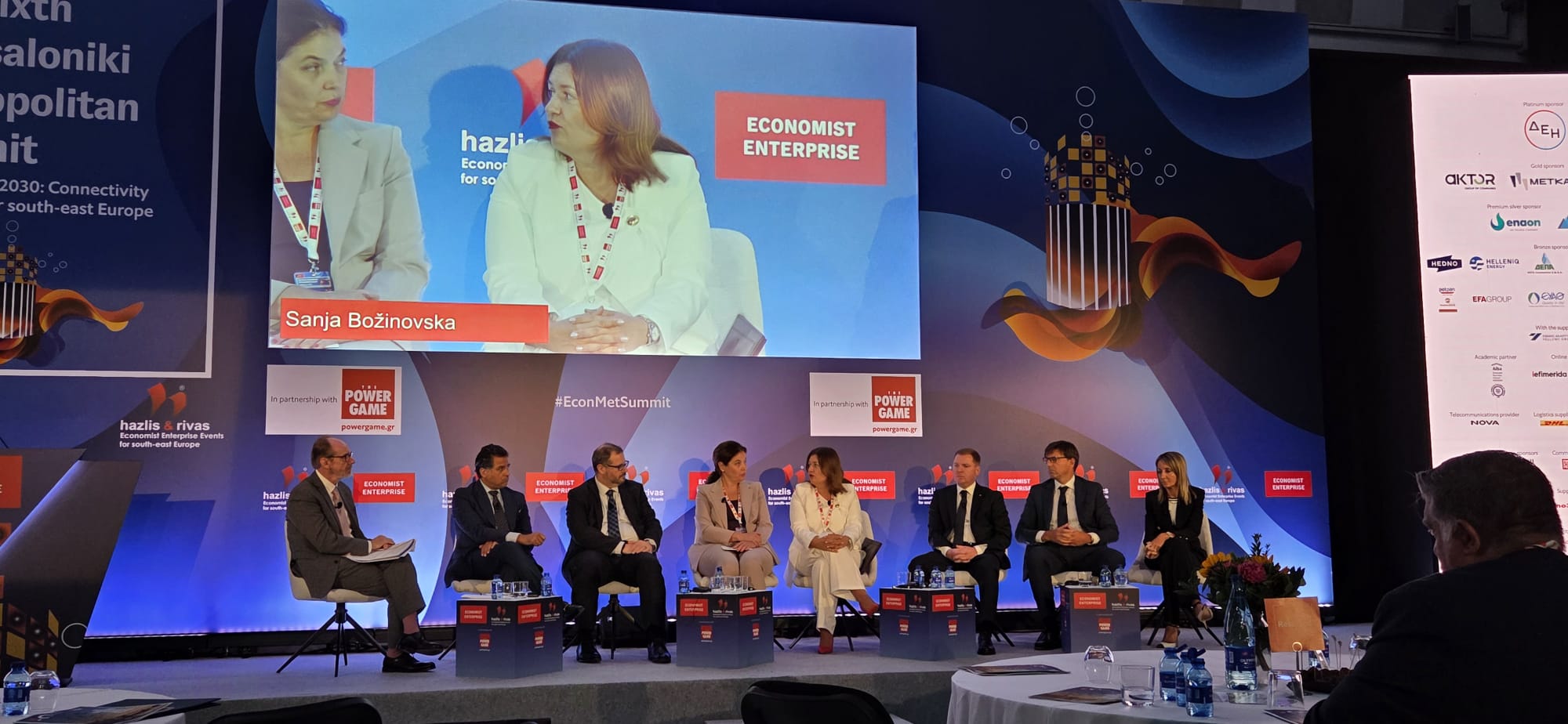
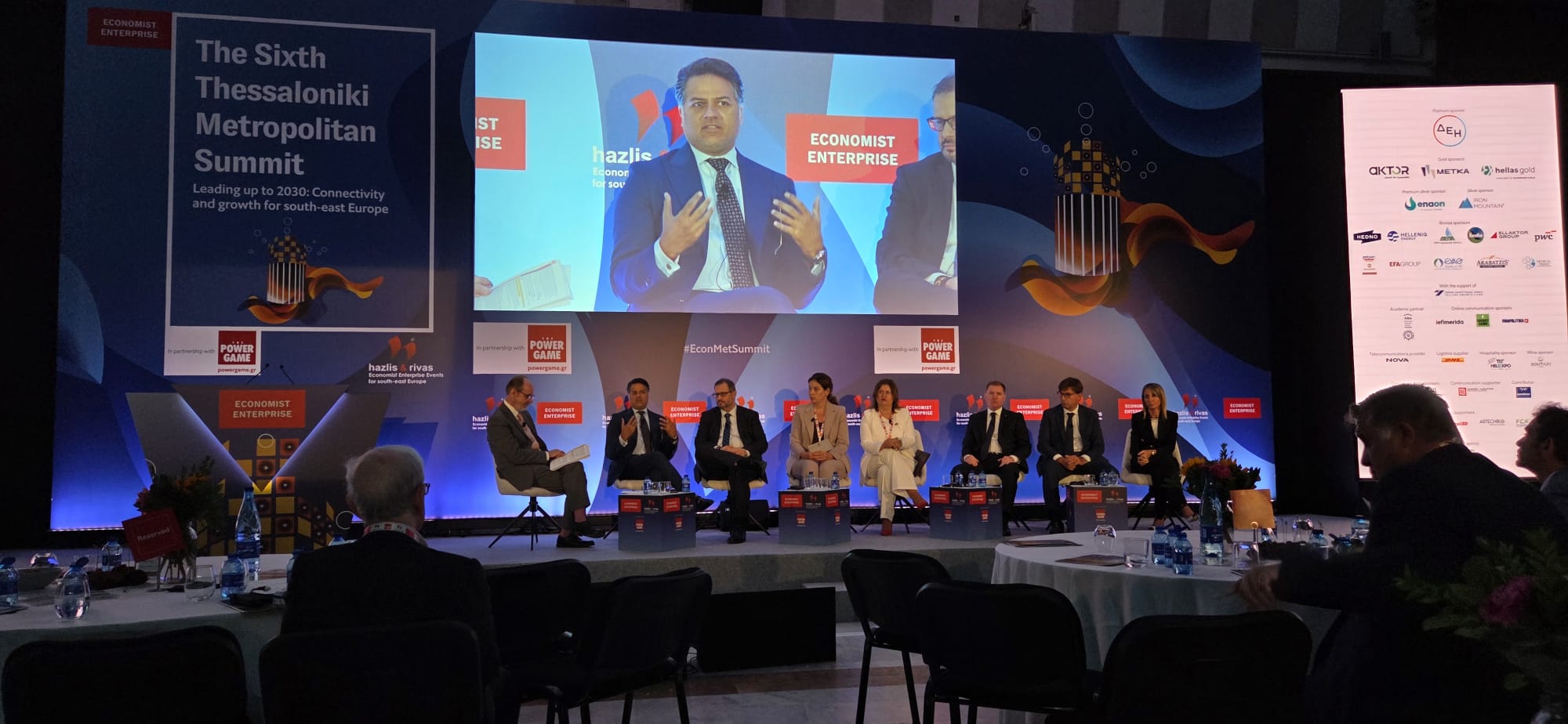
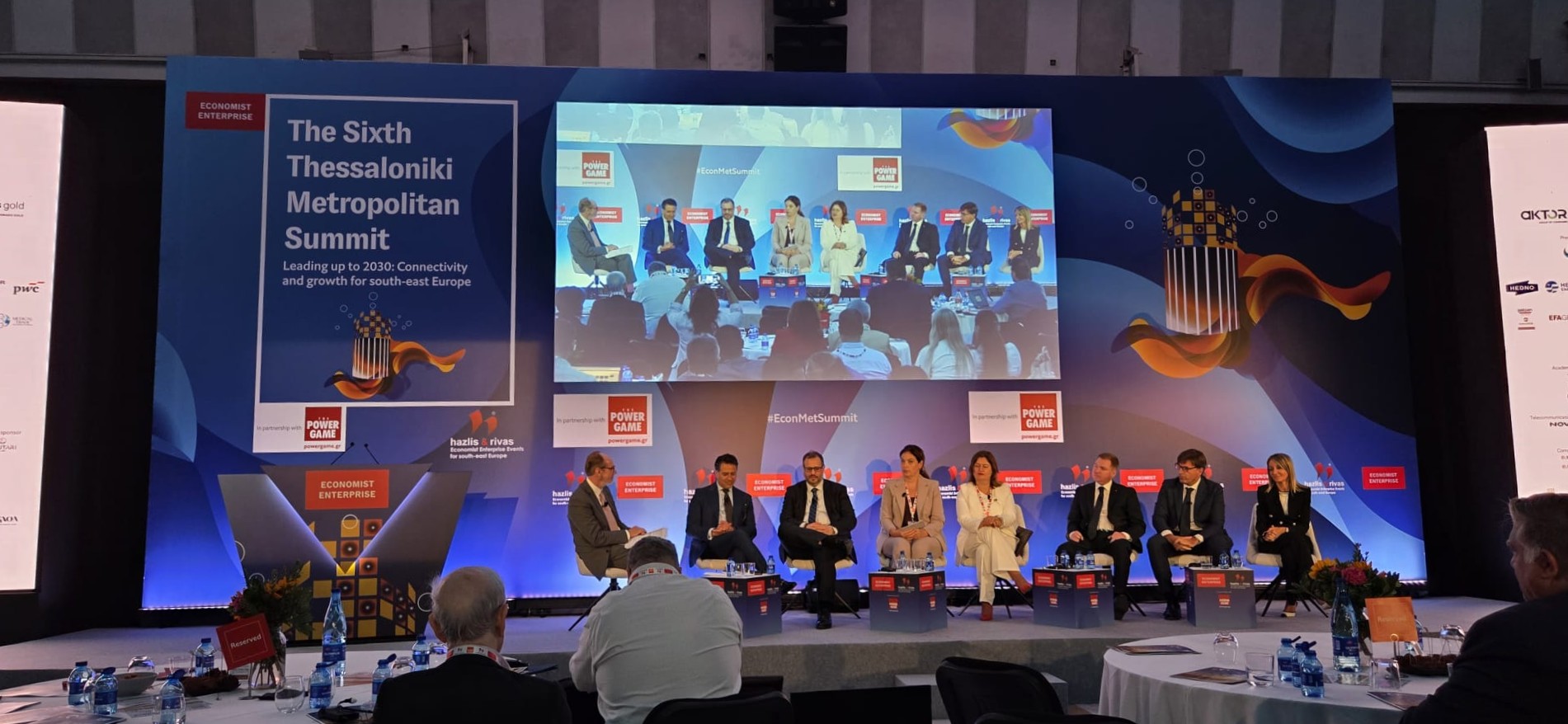
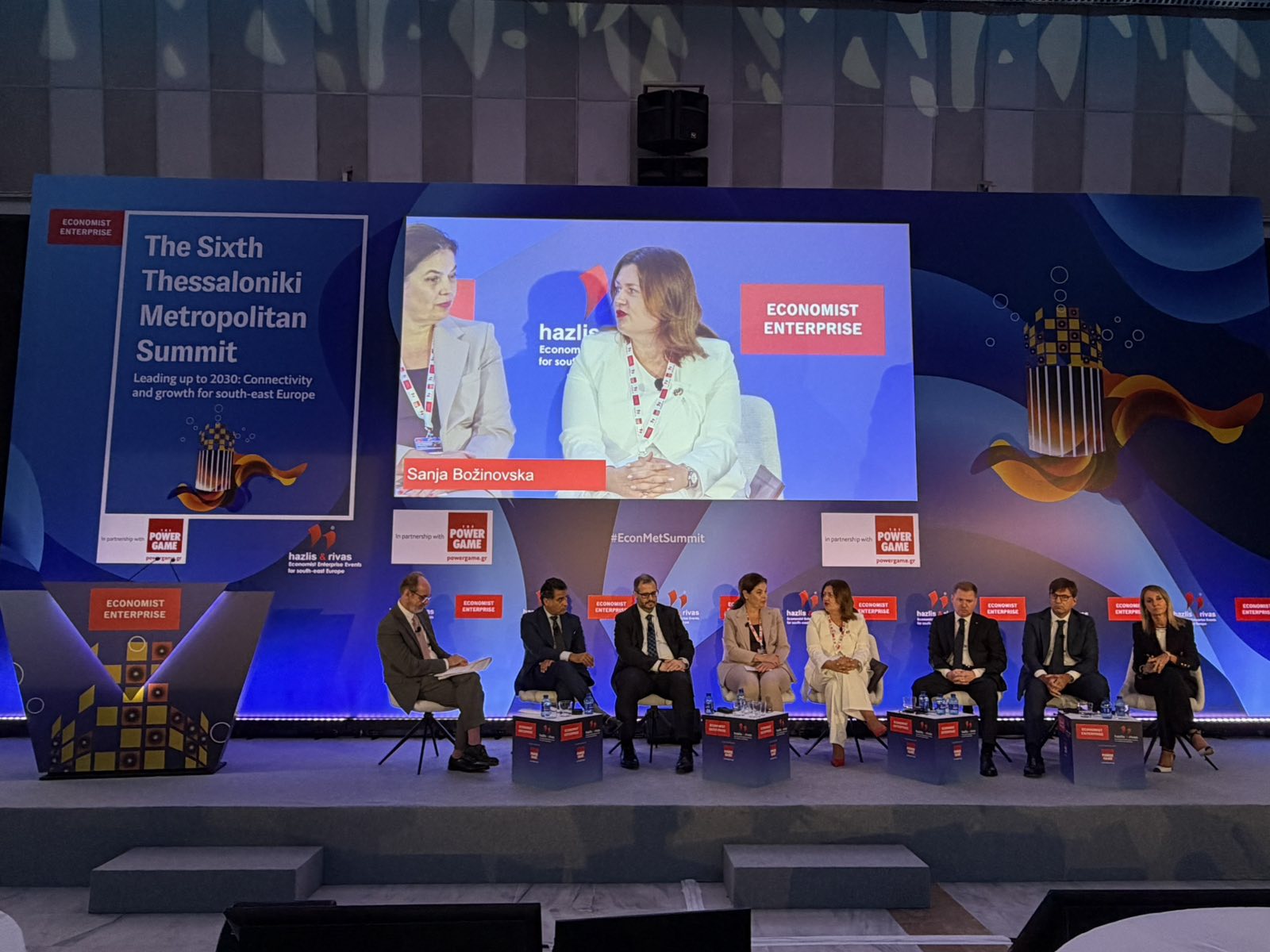
Today, Minister of energy, mining and mineral resources Sanja Bozhinovska participated in the Sixth Thessaloniki Metropolitan Summit, organized by The Economist, where, as an honorary guest and keynote speaker, she addressed senior representatives from the political, economic and business sectors from Greece, the region and Europe.
This year’s summit, titled “Axis 2030: Powering connectivity, unlocking growth for South-East Europe,” is dedicated to the future of connectivity, economic development, and the geopolitical and energy challenges facing Southeastern Europe.
In her address, Bozhinovska emphasized that energy security today is inextricably linked to the diversification of energy sources, cross-border infrastructure and regional connectivity.
“Energy independence means state sovereignty. Today, it is not enough simply to have access to energy – we must know where it can come from, through which routes it can reach us, and whether those routes are secure, diversified, and interconnected. Dependence on a single supplier makes us vulnerable. That is why diversification and cross-border connectivity are no longer a matter of choice, but a matter of energy security and economic development,” Bozhinovska said.
The focus of the Minister’s address was the Vertical Gas Corridor, which she described as one of the key projects shaping the new energy and geostrategic architecture of Southeast Europe.
“The Vertical Energy Corridor is not merely gas pipeline infrastructure. It is the new security, economic, and geostrategic architecture for Southeast Europe.”
Bozhinovska pointed out that, by officially joining the Vertical Gas Corridor, Macedonia is taking a historic step toward ending its decades-long dependence on a single gas route and opening to new sources and markets.
“Macedonia does not want to be merely an observer of these processes, but an active partner. After three decades, we are ending our complete dependence on a single gas route and building infrastructure that will place Macedonia on Europe’s new energy map.”
The Interconnector with Greece – Direct Access to Alternative Sources
The Minister noted that construction of the gas interconnector with Greece is progressing according to the planned schedule.
The interconnector has a total length of 123 kilometers, of which approximately 68 kilometers are located on the territory of Macedonia, and it is expected to become operational in 2027.
With the new gas connection, Macedonia will gain direct access to the Southern Gas Corridor and supply opportunities through the LNG terminals at Revithoussa and Alexandroupolis, opening access to diversified sources of natural gas.
“This is not just a project for Macedonia. It provides access to alternative gas sources for the entire region. With the interconnector, we are increasing security of supply, creating conditions for greater competition, and strengthening regional energy resilience,” Bozhinovska said.
From an End Point to a Transit Energy Corridor
In her address, Bozhinovska also emphasized the strategic importance of the interconnector with Serbia, through which Macedonia will establish a new gas connection to the north.
“Our vision does not stop at the border with Greece. We are moving forward with the interconnector with Serbia, creating a Western Balkan branch that will connect the south with Central and Eastern Europe.”
She pointed out that, by developing gas interconnections with both Greece and Serbia in parallel, Macedonia is transforming its position – from an end point of the gas system into a potential regional energy transit corridor.
“We are transforming the region from a passive end point into an active transit corridor. Macedonia has the ambition to become an energy link between the south and Central and Eastern Europe.”
The Minister emphasized that investments in gas infrastructure are part of a broader energy transition and that the new interconnectors must be ready for future technologies.
“Our vision goes beyond traditional energy sources. The architecture we are building today must be flexible enough to support the energy systems of tomorrow.”
In this context, Bozhinovska noted that the new infrastructure is being developed with a perspective for future hydrogen transport and with the aim of ensuring compatibility with Europe’s long-term decarbonization goals.
In addition to gas infrastructure, the Minister highlighted investments in renewable energy sources, particularly solar and wind power, as well as the need to modernize and strengthen electricity grids and cross-border interconnections.
“The energy transition is not simply about changing energy sources. It is about building a new system – with more sources, more connections, greater flexibility, and greater resilience.”
In the electricity sector, Bozhinovska noted that Macedonia is working to further strengthen regional connectivity through the Bitola–Elbasan interconnection, which completes Corridor 8, as well as through the upgrade of the existing connection with Greece and the development of a new interconnection with Bulgaria.
“No country in Southeast Europe can ensure its energy security on its own. That is why we need regional solidarity, interconnected infrastructure, and a common energy market.”
She stressed that Macedonia remains fully committed to the European vision of a connected, competitive, and resilient energy system.
“We are ready to work, ready to invest, and ready to be a reliable pillar of energy resilience in Southeast Europe.”
Minister Bozhinovska’s participation in the Economist Thessaloniki Metropolitan Summit 2026 provided an opportunity for Macedonia to present its strategic energy priorities and concrete infrastructure projects to relevant political, economic, and business stakeholders from the region and Europe, highlighting the country’s positioning as an active participant in the new energy architecture of Southeast Europe.
With regards,
The ministry of energy, mining and mineral resources